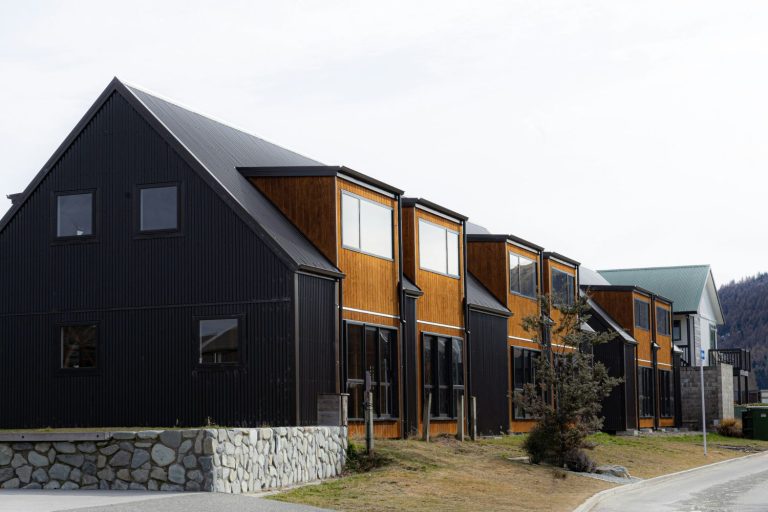
Housing affordability has improved slightly over the past year, but it remains out of reach for most Americans.
According to the National Association of Home Builders (NAHB)/Wells Fargo Cost of Housing Index (CHI), a family earning the nation’s median income of $106,800 spent 32% of that on mortgage payments for a median-priced new home in Q1 2026. For low-income families earning half of that, the share reached 65%.
If most mortgages are unattainable, VA loans are an option you can qualify for if you’re an active-duty service member, a veteran, or related to one.
What Is a VA Loan?
VA loans are home loans endorsed by the U.S. Department of Veterans Affairs (VA) for veterans, active-duty service members, and eligible surviving spouses.
The VA guarantees a portion of each loan through private lenders, which is what allows lenders to offer better terms.
How Does a VA Loan Work?
Applicants must submit their applications through the department’s partner lending institutions. The VA underwrites the default risk of these loans, which exempts borrowers from both down payment requirements and private mortgage insurance.
U.S. VA loans are exclusively restricted to primary residences, and lending institutions may establish additional credit and income assessment criteria.
VA Loan Limits
Veterans who hold full VA loan entitlement may apply for a zero-down-payment loan based on their income and credit.
Borrowers with an active VA loan or a prior default may have reduced entitlement, in which case the county-level Federal Housing Finance Agency (FHFA) limit determines the remainder. These limits update annually.
Current VA Loan Rates
As of May 21, 2026, the 30-year fixed VA purchase rate is 5.875%, up from last week’s 5.771%. The 30-year fixed refinance rate is 5.750%, down from 5.769%. The 15-year fixed purchase rate is 5.750%, compared to last week’s 5.630%.
Note: Rates may change daily.
VA Loan Costs and Fees

The VA caps certain closing costs and limits seller concessions to 4% of the home’s reasonable value, which affects how much a seller can contribute at closing.
VA Funding Fee
The funding fee is a one-time charge that sustains the loan program. The amount depends on the loan type, whether it is your first time using the benefit, and your down payment size.
First-time borrowers pay between 1.25% and 2.15% of the loan amount. On subsequent uses, the range rises to 1.25% to 3.3%. Borrowers with a service-connected disability and Purple Heart recipients are exempt.
Origination Fees
The mortgage origination fees charged by lending institutions are used to review and process loan applications. The general standard for VA loan origination fees is 1% of the total loan amount.
Other Closing Costs
Real estate closing costs make up 2% to 5% of a property’s transaction price, and they vary across different lending institutions. In addition to capital fees and loan origination fees, these costs also cover other related expenses.
- Real estate agent fees
- VA appraisal fee
- State and local taxes
- Loan discount points
- Title insurance
- Recording fee
Types of VA Loans
Qualified veterans have access to several loan types depending on their goals and current situation.
VA Purchase Loan
Eligible veterans and service members can buy new or existing homes with no down payment through a VA purchase loan.
This includes single-family homes, condominiums, manufactured homes, multiunit properties, and new construction. Guidelines vary by VA lender, and not all lenders offer every option.
VA Interest Rate Reduction Refinance Loan (IRRRL)
The streamline refinance loan, also called the VA IRRRL, is exclusively for borrowers with an existing VA loan.
It lowers your interest rate with minimal paperwork. Some lenders skip the credit underwriting, income verification, and appraisal entirely.
VA Cash-Out Refinance
The VA cash-out refinance lets qualified veterans refinance their mortgage and access home equity up to 90% of the home’s value.
It is open to veterans with or without a current VA loan. Borrowers are also free to skip the cash-out and use it as a rate-and-term refinance.
VA Renovation Loan
The VA renovation loan combines the cost of purchasing or refinancing a home with the cost of approved repairs into one loan.
Veterans use it to customize a property or bring it up to VA standards. Few lenders offer this option, so it may require additional searching to find one.
VA Energy Efficient Mortgage
Veterans can borrow up to $6,000 beyond their purchase or refinance amount to fund qualified energy upgrades.
Eligible home improvements include heat pumps, solar heating and cooling systems, and storm or thermal windows. Appliances and non-permanent additions do not qualify.
Native American Direct Loan (NADL)
The NADL helps eligible Native American veterans and their spouses buy or refinance a home on federal trust land. The VA issues this loan directly.
VA Loan Eligibility
Qualifying for a VA loan requires meeting these eligibility requirements.
Military Service
Eligible veterans, active-duty service members, National Guard members, and Reserve members all meet the VA’s service criteria. To confirm eligibility, borrowers need a Certificate of Eligibility (COE).
The COE is the VA’s official confirmation that a borrower meets service requirements. Borrowers can request one through a VA lender, through VA.gov, or by mailing VA Form 26-1880.
Lender and Financial
Once service eligibility is confirmed, the lender reviews employment, income, credit score, and debt-to-income ratio (DTI).
For VA loans, lenders generally require a DTI of 41% or below, and credit score requirements range from 620 to 670, depending on the lender.
Property and Occupancy
VA guaranteed loans cover single-family homes with up to four units, VA-approved condos, and manufactured homes or lots.
Each property must meet VA minimum property standards and serve as the borrower’s primary residence for personal occupancy. The VA does allow exceptions for deployed and active-duty service members.
Pros and Cons of VA Loans
VA loan benefits make homeownership more accessible for military families, but the program also has its limitations.
Pros
- No down payment required. Eligible veterans can buy a home without putting money down.
- Lower interest rates. Federal backing helps VA borrowers secure a competitive interest rate, which lowers monthly mortgage payments.
- No mortgage insurance. VA loans skip the private mortgage insurance requirement that conventional loans impose below a 20% down payment.
Cons
- Funding fees. A second VA loan with less than 5% down on a $350,000 home carries a 3.3% fee, or $11,550.
- Limited starting home equity. Borrowers who put 0% down start with no home equity and risk owing more than the home is worth if values fall.
- Minimum property requirements. Every purchase requires a VA appraisal, and repairs must be completed before the loan can close if the property falls short.
How to Apply for a VA Loan
The VA loan application process involves the following steps:
Step 1: Obtain Your Certificate of Eligibility (COE)
- Request the COE online through the U.S. Department of Veterans Affairs website.
- Go through your lender, who can pull and generate it on your behalf.
- Mail VA Form 26-1880 to the regional loan center in your area.
Step 2: Find VA-Approved Lenders and Get Preapproved
VA home loans are offered by VA-approved banks, credit unions, and mortgage companies. Shop rates and fees from at least two or three lenders before you choose one.
Then, get preapproved by showing proof of employment, income, assets, and debts, and allowing the lender to check your credit. If you are approved, you will get a preapproval letter that states your expected loan amount. This is good for 30 to 90 days.
Step 3: Shop for an Eligible Property and Make an Offer
With your COE and preapproval letter in hand, begin shopping for properties within your price range. A real estate agent can help you find listings, make offers, and negotiate with the seller for you.
Step 4: Undergo VA Appraisal and Underwriting
Once your offer is accepted, the lender will arrange for a VA appraisal to confirm the home’s value and to verify that it meets the VA minimum property requirements.
A separate home inspection at this stage gives you a more thorough look at the property’s condition.
Step 5: Close on Your Home
Submit your full mortgage application with all supporting financial documents. Respond to lender follow-up requests promptly to avoid delays. Once approved, you sign the final paperwork and close on your home loan.
VA Loans vs. Other Mortgage Types
| Loan Type | Down Payment | Mortgage Insurance | Key Feature |
|---|---|---|---|
| VA Loan | None required | None | Guaranteed by the VA; one-time funding fee instead of mortgage insurance |
| Fixed-Rate Mortgage | Varies | Required if less than 20% down | Rate and payment stay the same for the life of the loan |
| Adjustable-Rate Mortgage (ARM) | Varies | Required if less than 20% down | Fixed rate for an initial period, then adjusts to market conditions |
| Interest-Only Loan | Varies | Varies | Payments cover interest only for a limited period; principal stays unchanged |
| Reverse Mortgage | N/A | N/A | Access home equity without selling; funds available as lump sum, monthly payment, or line of credit |
| Conventional Conforming Loan | As low as 3% | Required if less than 20% down | Meets Fannie Mae/Freddie Mac guidelines; available at competitive rates |
| Jumbo Loan | 20% or more | Varies | Finances purchases above $832,750 (up to $1,249,125 in high-cost areas) in 2026 |
| FHA Loan | 3.5% with 500+ credit score | Required | Backed by the Federal Housing Administration |
| USDA Loan | None required | Upfront and annual guarantee fee | For eligible rural and suburban borrowers; no down payment required |
| Balloon Mortgage | Varies | Varies | Low initial payments followed by a lump-sum balance payment at the end of the term |
Is a VA Loan Right for You?
VA home loans offer the strongest value for eligible veterans, active-duty service members, and eligible surviving spouses buying a primary residence.
If you meet the service eligibility requirements, compare VA loan terms against other loan options before deciding.
You May Also Like:
Better Mortgage Reviews: Rates, Fees, Pros & Cons Explained
New American Funding Reviews: Rates, Loans & Service
Mortgagor vs Mortgagee: Definitions, Key Differences & Responsibilities
What Is a Piggyback Loan? Structures, Requirements, Pros, Cons, & How to Get
PenFed Mortgage Rates Explained: What Borrowers Should Expect