Inflation and tariffs significantly impact the cost of various goods, leading to higher prices for consumers. As inflation erodes purchasing power, items affected by inflation and tariffs become more expensive for households and businesses, increasing financial strain.
Tariffs, or taxes on imported goods, increase costs for companies that rely on foreign suppliers, forcing businesses to raise prices on everyday products.
Moreover, as inflation persists and tariffs drive up costs, economic uncertainty is growing. Many experts warn that these factors could signal a potential recession. Learn more about the warning signs of a recession and how they might affect jobs, wages, and financial stability.
These tariffs will increase costs at grocery stores, car dealerships, and electronics retailers nationwide.
Below is a breakdown of industries most affected by these economic changes.
Tariff and Inflation News as of October 2025
U.S. Threatens 100% Tariff on Chinese Goods
President Trump announced plans to impose a 100% tariff on all Chinese imports starting November 1, 2025, in retaliation for China’s tightened export restrictions on rare earth materials. The move is aimed at reducing U.S. dependence on Chinese manufacturing but risks escalating tensions between the two largest economies.
Economists warn that the tariff could sharply increase prices on everyday goods such as electronics, vehicles, and appliances, adding inflationary pressure to the U.S. economy. China has signaled possible retaliation, raising concerns of renewed supply chain disruptions and a potential trade war.
U.S. Inflation Showing Signs of Tariff‐Driven Pressure
Consumer prices in the U.S. rose at their fastest pace in five months in June 2025, signaling that tariffs are beginning to exert measurable pressure on inflation. The increase was driven largely by higher costs for imported goods such as electronics, auto parts, and household products, sectors directly affected by recent U.S. trade policies.
Analysts say this marks the first clear sign that tariff-related expenses are filtering through to consumers, after months of delayed impact due to existing inventories and supplier contracts.
Economists warn that the full inflationary effect of these tariffs may emerge in the second half of the year, as businesses restock at higher import prices and pass costs down the supply chain.
While the Federal Reserve continues to monitor these developments, experts note that prolonged tariff-driven inflation could complicate monetary policy decisions and slow progress toward the central bank’s 2% inflation target.
New Tariff Regulations Affect 66 Countries
On August 1, 2025, President Trump signed an executive order imposing new tariffs on 66 countries, including the European Union, South Korea, Taiwan, India, and Mexico, set to take effect on August 7. This marks one of the broadest trade interventions in U.S. history, with tariff levels not seen since the 1930s Smoot–Hawley Act.
| Country / Region | Tariff Rate | Goods Affected |
|---|---|---|
| Multiple (pharma & semiconductors globally) | Up to 250% | Pharmaceuticals, semiconductors (phased in, starting at lower rates) |
| Switzerland | 39% | Luxury watches (Rolex, Patek Philippe), certain pharmaceuticals |
| European Union (27 countries) | 30% | Automobiles (BMW, VW, Mercedes), luxury goods, agricultural exports, consumer products |
| Mexico | 30% | Agricultural products (avocados, tomatoes), auto parts, electronics (limited USMCA exemptions) |
| India | 25% | Textiles, IT hardware, generics & branded pharmaceuticals |
| South Korea & Taiwan | 25% (avg.) | Semiconductors, electronics, autos, steel, chemicals |
| United Kingdom | 25% | Autos, spirits (whiskey), pharmaceuticals |
| Japan | 20–25% | Autos, machinery, electronics |
| Vietnam | 20% | Textiles, footwear, electronics |
| Canada | 10–20% | Metals, lumber, agricultural goods (exemptions under USMCA still apply to some categories) |
| Other Countries (part of 66) | 10–25% | Includes: Australia, Brazil, Chile, South Africa, Argentina, Thailand, Malaysia, Indonesia, Turkey, Israel, and the Falkland Islands. Affected goods vary by country (agriculture, raw materials, consumer products). |
Expanded U.S. Tariff Rates by Country (2025) — Highest to Lowest
Trump’s April 2, 2025 “Liberation Day” speech and the August 1, 2025 executive order are two phases of the same tariff strategy. In April, Trump announced a universal 10% tariff on all imports, signaling his intent to impose higher rates on certain countries but without naming specifics.
That speech served as the blueprint for a sweeping trade reset. Four months later, the August executive order put those plans into action, issuing a detailed list of 66 countries subject to tariffs as seen above.
This was the initial tariff rates proposed last April 2025.
| Country/Region | Tariff Rate Imposed | Reason for Tariff |
|---|---|---|
| China | 54% | To address significant trade imbalances and concerns over intellectual property rights violations. |
| Cambodia | 49% | Targeting nations with close economic ties to China. |
| Vietnam | 46% | To counteract the use of Vietnam as an alternative manufacturing hub to bypass tariffs on Chinese goods. |
| Sri Lanka | 44% | Addressing concerns over trade practices and aligning with broader strategies to reduce trade deficits. |
| Bangladesh | 37% | Focusing on countries with textile exports. |
| Thailand | 36% | Aiming to correct trade imbalances and address concerns over market access for U.S. goods. |
| Taiwan | 32% | Addressing trade imbalances and concerns over technology. |
| Indonesia | 32% | Focusing on reducing trade deficits and addressing market access issues for U.S. products. |
| Switzerland | 31% | Targeting countries with significant trade surpluses with the U.S. and addressing financial sector concerns. |
| South Africa | 30% | Addressing trade imbalances and concerns over import restrictions on U.S. goods. |
| Pakistan | 29% | Focusing on trade practices and concerns over insufficient market access for U.S. exports. |
| India | 26% | To address high tariffs imposed by India on U.S. goods and reduce the trade deficit. |
| South Korea | 25% | Targeting the automotive and steel industries to address trade imbalances. |
| Japan | 24% | Addressing longstanding trade surpluses and seeking more reciprocal trade terms. |
| European Union | 20% | To counter perceived unfair trade practices and reduce the trade deficit with EU member countries. |
| United Kingdom | 19% | Post-Brexit trade adjustments aiming for more balanced trade relations. |
| Brazil | 16% | Focusing on agricultural and mining sectors to address trade imbalances. |
| Saudi Arabia | 12% | Addressing trade deficits while considering strategic energy partnerships. |
| All Countries (Universal) | 10% | Baseline tariff aimed at promoting domestic manufacturing and reducing overall trade deficits. |
| Israel | 10% | Standard rate with considerations for ongoing trade and defense collaborations. |
| Australia | 10% | Maintaining balanced trade relations with a key ally and trade partner. |
China Tariff Forecast Scenarios
Scenario | Tariff Status | Impact on U.S. Consumers | Impact on U.S. Businesses | Impact on Economy & Markets |
Deal Reached (extended truce or partial agreement) | Tariffs remain paused; limited concessions from China (agriculture, energy purchases) | Prices remain stable on electronics, clothing, toys, and household goods | Manufacturers keep access to low‑cost Chinese components; ag exports partially stabilized | Stock markets calm; inflation pressure muted; GDP growth steadier (~2% annualized) |
No Deal (Tariffs Snap Back) | Up to 60% tariffs on Chinese imports; counter‑tariffs from China on U.S. farm goods & autos | Higher prices on everyday goods; CPI inflation up 0.3–0.5% by year‑end | U.S. farmers lose market access; manufacturers face higher costs & supply chain delays; retail margins squeezed | Markets volatile: equities fall, bond yields drop; GDP slows (<1.5% annualized); stagflation risk rises |
Escalation Beyond 60% (worst case) | Trump raises tariffs beyond 60%; China retaliates broadly | Steep inflation on electronics, apparel, consumer staples; possible shortages in tech hardware | Supply chains severely disrupted; ag, auto, and aerospace exports collapse | Recessionary risk: growth near 0%, Fed under pressure to cut rates aggressively; global markets hit hard |
Items Most Affected by Inflation and Tariffs
Inflation and tariffs are increasing production and import costs, leading to higher prices in several industries. Additionally, consumers and businesses face rising costs, which forces changes in spending, pricing strategies, and supply chain management.
Groceries
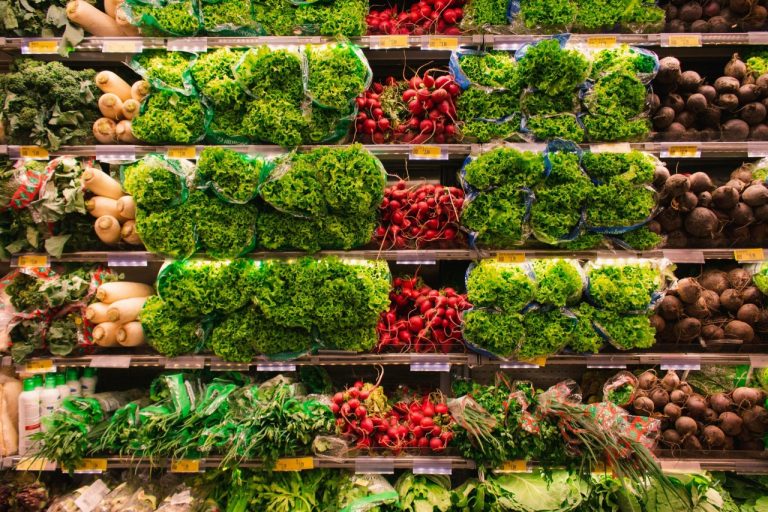
Nearly 45% of U.S. groceries come from Canada, China, and Mexico, leading to price increases. Mexico supplies essential produce like avocados, tomatoes, and berries, which directly impact grocery costs. The egg market already faces supply shortages due to avian flu outbreaks and worsening price hikes.
Items affected by inflation and tariffs are importing essential foods that will become more expensive for businesses and consumers.
Fresh produce costs are expected to increase by 1.8%, further straining household budgets. Tariffs force retailers to pay more for imports, increasing grocery prices for shoppers.
Higher grocery prices will impact consumers who rely on fresh food for healthy eating and meal prep. Restaurants that use imported ingredients will also raise menu prices, which will increase dining costs for families. Eventually, these changes will reduce purchasing power, forcing consumers to adjust budgets.
To better manage grocery expenses, check out this step-by-step guide on lowering bills.
Cars and Auto Parts
The auto industry depends on imports, with 42.5% of auto parts coming from tariffed countries like Mexico. The new 25% tariff on Mexican imports certainly will increase vehicle manufacturing and maintenance costs.
Basically, auto parts like engines, transmissions, and electronics will become more expensive for manufacturers and repair shops. Analysts from Jefferies have estimated that President Trump’s new tariffs could raise the average price of new cars in the U.S. by approximately $2,700. Routine car maintenance and repairs will become costlier for consumers nationwide.
Moreover, some items are affected by inflation and tariffs which leads to higher prices on vehicles and replacement parts. Dealerships may absorb costs temporarily but will eventually pass expenses onto car buyers. Financing a car will cost more, as higher prices lead to larger auto loans.
Additionally, rideshare companies, delivery services, and transportation-dependent businesses will face higher operating costs, which could lead to increased service fees for consumers. Many buyers may delay car purchases, opt for used vehicles, or seek alternative transportation methods like electric cars.
These higher costs across the auto industry will further strain consumer budgets, limiting spending power and making transportation more expensive for households and businesses alike.
Electronics
Another sector affected by inflation and tariffs is the electronics sector. The electronics industry is heavily dependent on imports, with 60% of devices coming from China and Mexico. Tariffs on tech imports will increase prices for laptops, smartphones, and gaming consoles.
Essential items like computers, televisions, and appliances will become less affordable for many families eventually.
Retailers like Walmart, Best Buy, and Amazon will raise prices to offset increased import costs. Furthermore, low-income households may struggle to afford essential electronics for work, education, and daily life.
Tariffs will impact holiday shopping, as Black Friday and Cyber Monday discounts will decrease. Many consumers will delay tech upgrades, reducing overall sales for electronics manufacturers.
Home Improvement Supplies & Houseware
Furniture, home improvement materials, and textiles will increase in cost due to rising import expenses. More than half of these products come from Canada, China, and Mexico.
According to a recent report, the Institute for Supply Management (ISM) anticipates that prices for raw materials, including textiles, will increase by an average of 3.3% between December 2024 and December 2025. Additionally, the furniture industry is expected to experience price hikes ranging from 10% to 30% due to increased costs of materials and components affected by tariffs.
These tariffs contribute to inflation by raising production and distribution costs across multiple industries. Due to higher renovation expenses, homeowners may delay repairs or take out loans for home upgrades.
Renters looking to make energy-efficient improvements will face additional financial challenges. Consumers will need to prioritize essential maintenance over non-essential home upgrades.
Toys
Tariffs will significantly affect toys, as 80% of U.S. toys are imported from China. Brands like LEGO, Barbie, and Hot Wheels will experience price hikes.
Retailers like Walmart, Target, and Amazon will have no choice but to increase prices. Families will face higher costs for children’s toys, especially during the holiday season.
Limited domestic toy production means the U.S. relies heavily on imports. Manufacturers will pass additional expenses onto consumers, making toys less affordable.
Due to rising costs, parents may seek second-hand options or reduce toy purchases. Holiday shopping events will have fewer discounts, making gifts more expensive.
Energy
Tariffs on Canadian oil and gas will increase energy costs. This will impact electricity and gasoline prices. Canada is a major U.S. supplier, particularly for northern states.
As of February 2025, gasoline prices have experienced regional fluctuations. The Rocky Mountain and West Coast regions saw increases of 4 cents per gallon, while the national average remained stable at $3.14 per gallon. Power plants dependent on imported fuel are facing higher operational costs due to a 24% rise in natural gas prices compared to the previous year.
Businesses will pass fuel costs onto consumers, increasing transportation and logistics expenses. Higher gas prices will further contribute to inflation, affecting household budgets.
Consumers will face higher utility bills, especially in colder regions dependent on heating. Many households may seek alternative energy sources or reduce consumption.
Alcohol
The alcohol industry in the United States heavily relies on imports from Mexico, making it vulnerable to the newly imposed tariffs. From January to June 2024, the U.S. imported $3.8 billion worth of beer, with Mexican shipments accounting for $3.2 billion.
Generally, this reinforces Mexico’s status as the world’s leading beer exporter, with beer remaining the top agricultural export from Mexico to the U.S.
Bars, restaurants, and liquor stores will charge more for imported alcoholic beverages. Consumers can expect higher prices at grocery stores, bars, and nightclubs.
Hence, lower-income consumers may opt for domestic alternatives or reduce alcohol purchases.
Tariffs on alcohol will increase overall living costs, limiting discretionary spending. Many businesses in the hospitality industry will experience declining sales.
Economic Ripple Effects of Inflation and Tariffs
The combination of tariffs and inflation creates a domino effect that impacts businesses, consumers, and the financial markets. As import costs increase, companies are forced to adjust their pricing, supply chains, and operational strategies, leading to higher costs for everyday goods and services. Below is a breakdown of how tariffs contribute to inflation and affect various sectors of the economy.
Business Reactions to Items Affected by Inflation and Tariffs
Due to tariffs, businesses that rely on imported goods and raw materials will face higher production costs. To compensate, many companies will pass these costs onto consumers, leading to higher prices across multiple industries.
- Some businesses may initially absorb the higher costs to remain competitive, but over time, price increases will be unavoidable as profit margins shrink.
- Retailers like Walmart, Target, and Amazon will likely adjust their inventory and pricing strategies, potentially limiting stock on highly tariffed products or shifting toward domestic alternatives which may also be expensive due to rising demand.
- Small businesses and manufacturers that depend on imported materials may struggle to keep prices affordable, leading to reduced production, potential layoffs, or business closures in extreme cases.
As companies navigate higher operating costs, consumers will bear the financial burden, ultimately fueling inflation as the cost of living rises across the board.
Consumer Impact of Items Affected by Inflation and Tariffs
The direct effect of tariffs is felt most by consumers, who experience higher costs for items affected by inflation and tariffs, such as groceries, cars, electronics, home goods, and fuel.
- Higher grocery bills: With tariffs on produce, eggs, and meat, consumers will pay more for food staples, impacting their monthly budgets and dietary choices.
- Rising car prices: Tariffs on auto parts and vehicles will make new car purchases and repairs more expensive, delaying upgrades for many consumers.
- More costly electronics: The price increase on laptops, smartphones, and home appliances will make tech upgrades less accessible, impacting students, workers, and businesses.
- Less disposable income: As essential costs rise, households will have less money for non-essential purchases, potentially leading to reduced spending on entertainment, dining, and travel.
- Potential job cuts and wage stagnation: Industries heavily affected by tariffs, such as automotive, retail, and manufacturing, may resort to job reductions or hiring freezes to offset rising costs, slowing economic growth and limiting wage increases.
These factors not only reduce consumer purchasing power but also contribute to broader economic instability, making it harder for families to save or invest.
Market Reactions to Items Affected by Inflation and Tariffs
Financial markets respond quickly to tariff policies, often causing volatility in stock prices and investor behavior.
- Companies most affected by tariffs, such as alcohol brands, auto manufacturers, and electronics retailers, may see stock fluctuations as investors anticipate lower profits due to higher production costs and reduced consumer spending.
- Retailers and import-heavy businesses may experience stock declines, particularly if tariffs remain in place long-term, making imported goods more expensive and less competitive.
- Investors may shift toward companies focused on domestic production, expecting higher demand for U.S.-made goods. However, since domestic manufacturers also rely on imported raw materials and components, they may also struggle with increased costs, limiting the overall benefits.
As tariffs continue to drive inflation, market uncertainty could affect retirement accounts, investment portfolios, and business expansion plans, creating a challenging economic environment for both companies and individuals.
What Are Economists Saying About Tariff and Inflation?
Because items are affected by inflation and tariffs, some economists are forecasting what will happen this year until next:
Slower Growth, Lasting Effects
Economists broadly warn that the new tariffs are already cooling U.S. economic growth. Models estimate that real GDP growth may be 0.6 to 0.9 percentage points lower in 2025 than it would have been otherwise, with permanent GDP losses around 0.4–0.6%, equivalent to $100–$160 billion per year if tariffs remain.
Rising Consumer Prices
Tariffs act as direct taxes on imports, and most of that cost is passed on to consumers. Estimates show about a 1.3% price increase in the short term, with sectors like apparel rising by 17% and car prices climbing over 11%.
Average household losses are estimated at $2,000–$3,800 annually.
Business Strain and Trade uncertainty
Over 30% of CFOs describe trade and tariffs as their most pressing concern up from just 8% earlier highlighting widespread uncertainty around supply chains and investment decisions.
Long-Term Wage Suppression and Inflation Risks
By 2028, real wages are projected to be around 1.4% lower, while GDP remains depressed. Many economists point to elevated inflation alongside slowing growth, stagflation, as a key risk.
Policy Revenue vs. Economic Cost
While tariff revenue is substantial, estimated to reach $450–$500 billion annually, critics argue this temporary fiscal boost cannot offset long-term economic inefficiencies and reduced consumer welfare.
What Can Consumers Do to Manage Rising Costs from Inflation and Tariffs?

Items affected by inflation and tariffs increase in price, which leads to consumers adapting their spending habits to minimize financial strain. While these price hikes are largely unavoidable, households can mitigate their impact by making strategic adjustments to their budgets.
Adjust Grocery Shopping Habits
Since groceries are items affected by inflation and tariffs, consumers must take proactive steps to reduce food costs and manage their budgets effectively. Understanding different types of expenses can help households prioritize spending and adjust to rising grocery prices.
- Buy in bulk for non-perishable items to lock in lower prices before costs increase further.
- Choose seasonal and locally grown produce to avoid the higher costs of imported fruits and vegetables.
- Reduce reliance on eggs and meat, which have seen significant price hikes, by incorporating alternative protein sources such as beans, lentils, and tofu.
- Use coupons, cashback apps, and grocery store rewards programs to maximize savings on essential food items.
- Limit food waste by planning meals and using leftovers efficiently.
Be Strategic About Big Purchases (Cars & Electronics)
For big purchases like vehicles, smartphones, and laptops, which have been hit with tariff-related price increases, consumers can:
- Delay major purchases, if possible, as prices may stabilize over time. If a new car or laptop is not an urgent need, consider waiting.
- Buy refurbished or second-hand electronics instead of paying full price for brand-new devices.
- Invest in maintenance to extend the lifespan of existing cars and electronics, avoiding costly replacements.
- Consider alternative transportation such as public transit, carpooling, or electric vehicles to reduce fuel expenses.
Save on Energy and Fuel Costs
For budget-friendly eco-friendly solutions, check out affordable sustainability tips to save money while reducing your carbon footprint. With gasoline and electricity prices rising, households can take steps to reduce energy expenses:
- Lower energy consumption by using energy-efficient appliances, LED bulbs, and smart thermostats.
- Combine errands and carpool to minimize unnecessary driving and fuel usage.
- Use fuel rewards programs at grocery stores and gas stations to save on each gallon of gas.
- Explore solar or alternative energy options to lower long-term utility costs.
Shop Smart for Home Improvement and Furniture
With home goods and renovation materials becoming more expensive, homeowners and renters can:
- Look for second-hand furniture at thrift stores, online marketplaces, or local swaps instead of buying new.
- Take on DIY home repairs instead of hiring contractors when possible.
- Shop during sales events (such as Memorial Day or Black Friday) to find discounts on furniture and home improvement materials.
Cut Back on Non-Essential Spending
With tariffs and inflation reducing overall purchasing power, it’s more important than ever to prioritize needs over wants and take control of spending habits. Many consumers struggle with impulse buying or experience money dysmorphia, a distorted perception of financial reality that leads to unnecessary spending. Understanding the psychology of spending can help consumers recognize emotional triggers and make smarter financial decisions.
- Reduce discretionary expenses like dining out, entertainment, and luxury purchases.
- Limit alcohol purchases, as beer and liquor prices are rising due to tariffs on Mexican imports.
- Reevaluate holiday shopping, focusing on meaningful gifts rather than expensive electronics and toys.
- Learn how to stop overspending with actionable strategies to manage finances more effectively.
Maximize Income and Savings
With rising prices straining household budgets, finding ways to increase financial stability is essential. A combination of smart budgeting, additional income sources, and strategic savings can help offset the impact of inflation and tariffs. If you’re struggling to manage money on a tight budget, check out how to budget on a low income for practical strategies to stretch your finances further.
Here are key ways to boost financial stability:
- Look for additional income sources, such as side hustles or freelance work, to offset rising costs. Explore side hustles that align with your skills and availability.
- Consider passive income opportunities, such as investments or rental properties, to build long-term financial security. Learn more about passive income and how it can supplement your earnings.
- Use credit card rewards and cashback programs to save money on everyday purchases and essential expenses.
- Build an emergency fund to prepare for unexpected price increases or financial hardships. Explore short-term investments to grow your savings while keeping funds accessible.
- Think long-term by investing wisely, whether in stocks, bonds, or retirement accounts. Understand the benefits of long-term investments to secure financial stability for the future.
Inflation Forecast 2025
As of January 2025, the annual inflation rate edged up to 3%, slightly above market forecasts. Core inflation, which excludes food and energy prices, also increased to 3.3%. This upward trend suggests that inflationary pressures remain resilient.
Economists have raised their inflation forecasts for 2025, citing concerns over recent tariff implementations. These tariffs are expected to contribute to higher consumer prices, with projections indicating that inflation could rise more than previously anticipated in the latter half of the year.
Tariff Policy in 2025
In early 2025, President Donald Trump announced significant tariffs on imports from key trading partners:
- Canada and Mexico: A 25% tariff on imported goods, with an additional 10% on energy imports from Canada.
- China: An incremental 10% tariff on imported goods.
These tariffs are anticipated to impact various sectors, including consumer electronics, automobiles, and raw materials, leading to increased production costs and, consequently, higher prices for consumers.
With Inflation and Tariffs, What Will Happen to the Economy in 2025?
The combination of rising inflation and new tariffs has introduced uncertainty into financial markets. Investors are particularly concerned about potential inflation spikes and their effects on economic growth. Some analysts warn of a possible 10% stock market sell-off by the second half of the year if stagflation, characterized by high inflation and stagnant economic growth, emerges.
Additionally, businesses are exhibiting caution due to policy unpredictability, leading to restrained investment and expansion plans. This environment, termed “scaredy-cat capitalism,” reflects corporate hesitation in response to rapid and unpredictable policy changes.