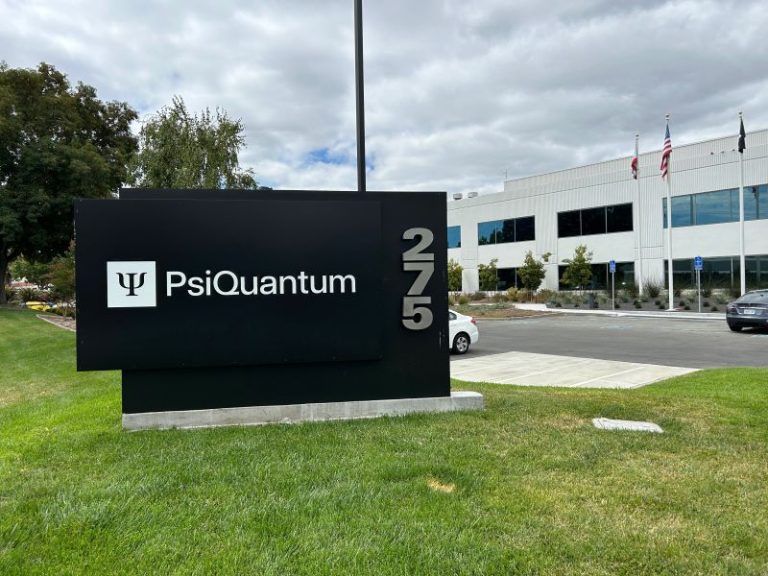
PsiQuantum, a Palo Alto-based quantum computing company, is further distancing itself from early-stage peers and positioning itself as a serious contender in the race to build scalable quantum systems.
Known for its focus on photonic quantum computing, the company is also actively pursuing commercial viability at a scale that few others in the space can claim.
This article looks at three recent developments: the $1 billion funding round, PsiQuantum’s formal entry into a DARPA program, and the launch of its Omega chipset.
PsiQuantum Secures $1 Billion Funding, Hits $7 Billion Valuation
We’ve raised over $1 billion towards our work to build the world’s first million-qubit scale, fault-tolerant quantum computers.
We are thrilled to have @BlackRock, @Temasek, and @BaillieGifford lead this round now valuing the company at $7 billion and welcome @Macquarie Capital,… pic.twitter.com/evONqDVzNg
— PsiQuantum (@PsiQuantum) September 10, 2025
PsiQuantum confirmed a $1 billion Series E funding round on Wednesday, September 10. The capital will support the buildout of quantum computing sites in Brisbane and Chicago, where the company plans to deploy large-scale prototype systems.
These efforts aim to validate its system architecture and improve the performance of its photonic chips and fault-tolerant design.
The round was led by funds managed by BlackRock, with participation from Temasek and Baillie Gifford. PsiQuantum is now valued at $7 billion.
Some of the new backers include Macquarie Capital, Ribbit Capital, and NVentures (NVIDIA).
Additionally, existing investors – T. Rowe Price, Third Point, and Blackbird – joined the round.
This funding also deepens PsiQuantum’s technical partnership with NVIDIA.
In addition to NVentures’ investment, the two companies are working across several layers of development, from algorithm design to software integration and GPU–QPU connectivity.
These are all supported by PsiQuantum’s silicon photonics platform.
DARPA Selects PsiQuantum for Final Stage of Quantum Computing Project
On April 15, 2025, the Defense Advanced Research Projects Agency (DARPA) named PsiQuantum as one of the companies advancing to the final phase of its Utility-Scale Quantum Computing (US2QC) program.
This phase, called Validation and Co-Design, is part of the Quantum Benchmarking Initiative (QBI), which aims to evaluate progress toward practical, fault-tolerant quantum systems.
PsiQuantum’s selection also signals that DARPA sees measurable potential in its photonic approach.
Moreover, the program now moves into deeper technical assessment, focusing on system architecture, hardware integration, and long-term scalability.
PsiQuantum Unveils Omega Chipset for Photonic Quantum Computing
Introducing Omega, the first manufacturable chipset for photonic quantum computing. Designed by PsiQuantum and manufactured at @GlobalFoundries, this chipset contains all the advanced photonic components required for million-qubit-scale quantum computers. https://t.co/qi4qxGKjw7 pic.twitter.com/19Dh7NQ2Sa
— PsiQuantum (@PsiQuantum) February 26, 2025
On February 26, 2025, PsiQuantum introduced Omega, a photonic quantum chipset built to support million-qubit systems.
The company designed Omega specifically for large-scale, fault-tolerant quantum computing, addressing the performance and integration requirements that smaller experimental setups can’t handle.
Every component in Omega has been fabricated to exceed current benchmarks in photonic circuit performance.
It combines quantum light sources, switches, and detectors on a single platform, with the consistency needed for utility-scale operation.
PsiQuantum also designed the chipset in-house and partnered with GlobalFoundries for manufacturing.
Production is based in New York using established semiconductor processes, which allows the chipset to be integrated into industrial-scale systems without waiting on unproven fabrication methods.
Conclusion
PsiQuantum is no longer positioning itself as experimental. Its recent funding, technical milestones, and government validation suggest it’s now operating on execution timelines.
The financial scale and manufacturing choices also point to longer-term ambitions beyond prototypes.
Furthermore, investors and industry analysts should now assess PsiQuantum through the lens of capital efficiency, supply chain risk, and system-level delivery.
To stay ahead of the latest in PsiQuantum and the quantum computing industry, subscribe to Financial Daily Update today.
Latest News
-
Nebius: Microsoft Multi-Billion Dollar AI Deal, Q2 Results & More
-
Netskope News: U.S. IPO Goals, Recognition & Company Outlook
-
Lululemon News: Market Challenges, New AI Chief & Global Growth
-
Atlassian News: Acquisition, FY2025 Results, & Company Outlook
-
HappyRobot News: $44M Funding, Supply Chain Award & Venture Backing
-
Figure Technologies Seeks $4.1B IPO, Expands Lending Services
-
Forever 21 News: Revival, U.S. Liquidation, & Global Outlook